The Wrought-Iron Art Biennial of Stia is the world’s longest-running and most traditional exhibition of artistic wrought iron, active without interruption since its founding in 1976. From a local craft trade fair to a world capital of forging: this is the story of fifty years of passion forged in metal.
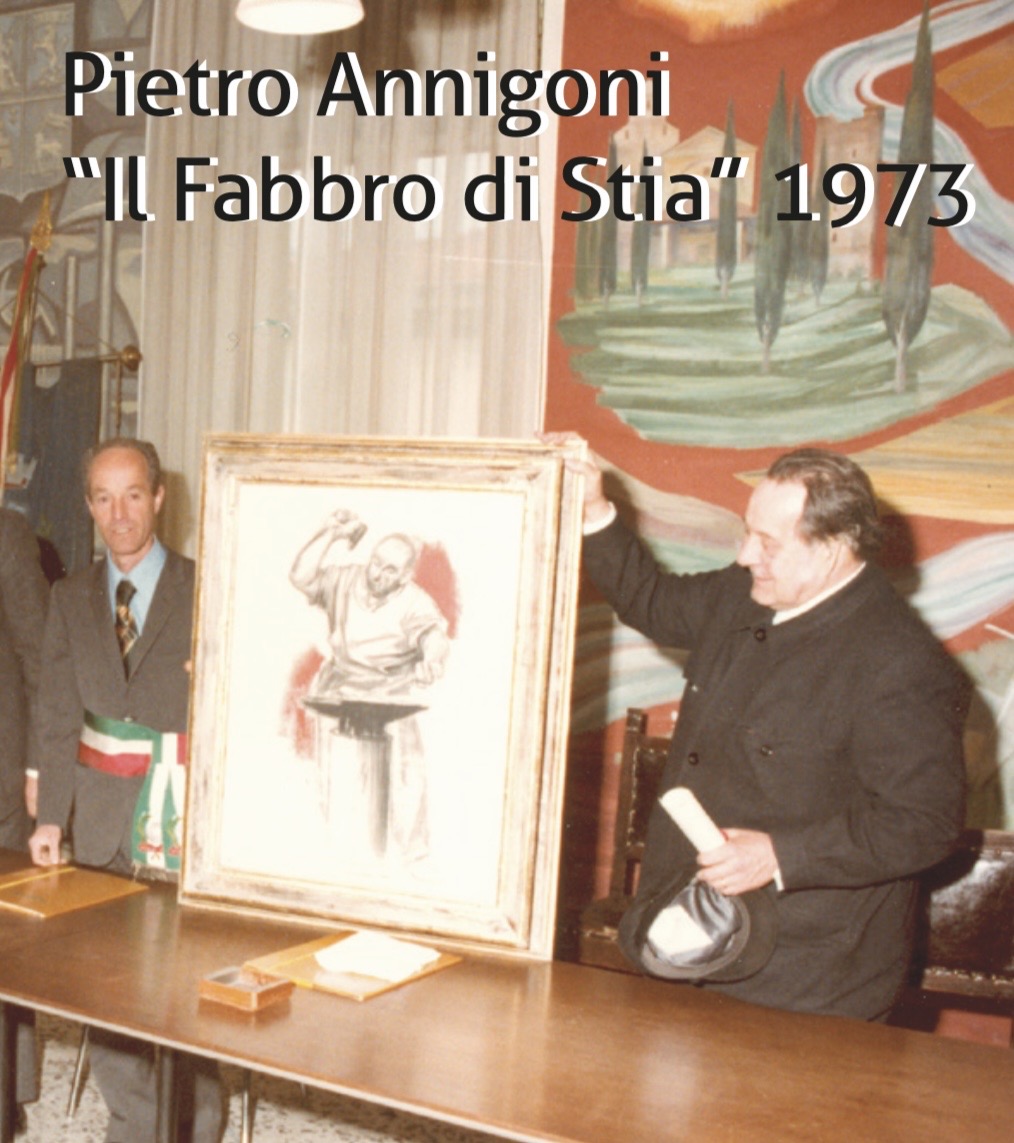
Pietro Annigoni — “The Blacksmith of Stia”, 1973
▪ 1973 · The origins
The Ironbeater manifesto
The Biennial’s symbol was born from the hand of Maestro Pietro Annigoni, who in 1973 gave Stia “The Blacksmith of Stia”. The Ironbeater manifesto — the man hammering on the anvil — would make the exhibition known around the world.
The image was carried to every continent by Alitalia aircraft: a Tuscan citizen returning from a business trip told of his amazement at finding the poster displayed at Taipei airport.
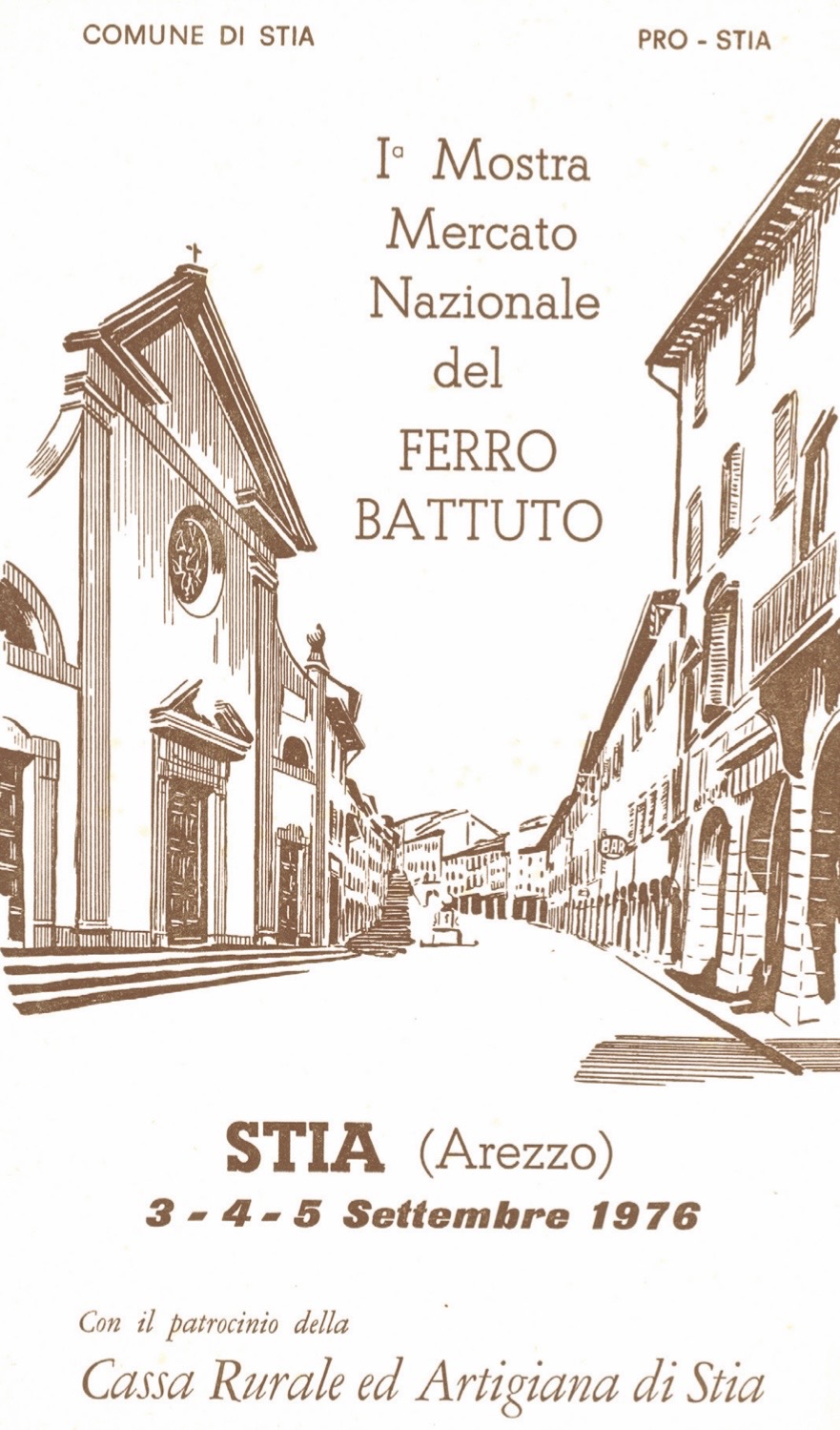
▪ 3 · 4 · 5 September 1976
The first edition
It all began with the 1st National Wrought-Iron Trade Fair, under the patronage of the Municipality of Stia and the Cassa Rurale ed Artigiana. A commercial showcase for iron craftsmen, created to promote the ancient art of forging — a centuries-old tradition distinctive of the Casentino area.
Since that first September, the event has never stopped: it has grown and evolved decade after decade, becoming the appointment the forging world knows today.
EDITION No. 1
▪ The years of growth
The streets become a forge
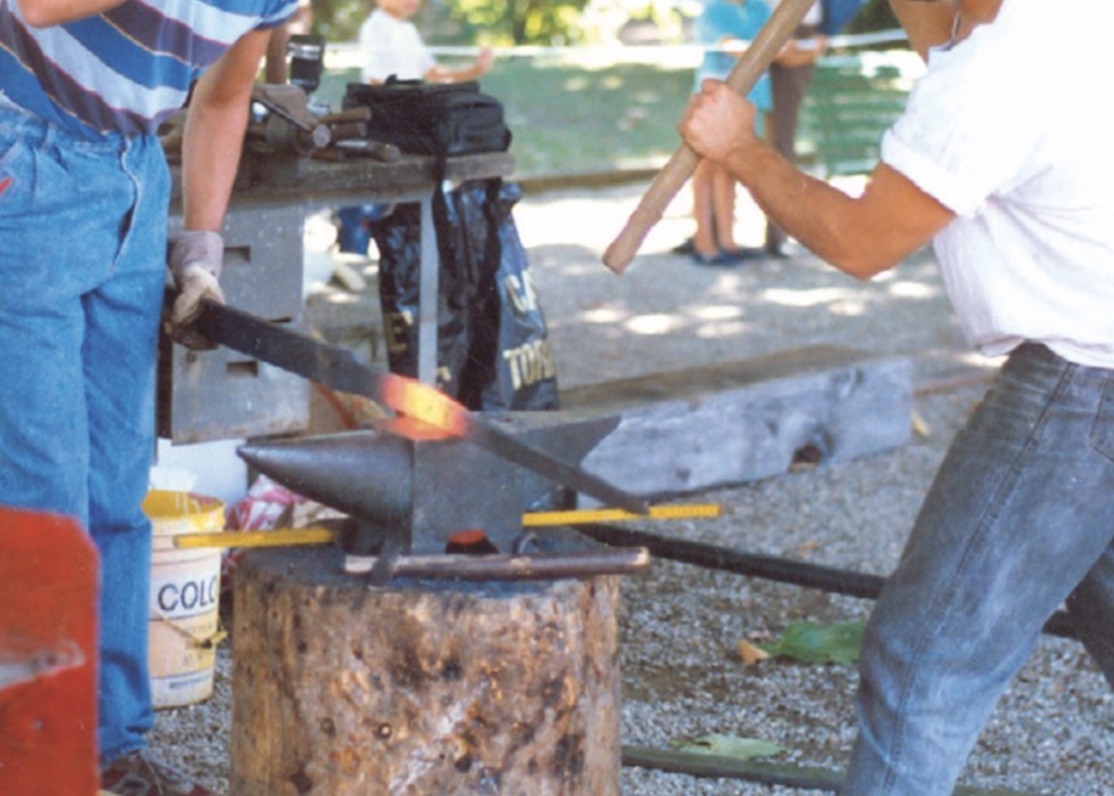
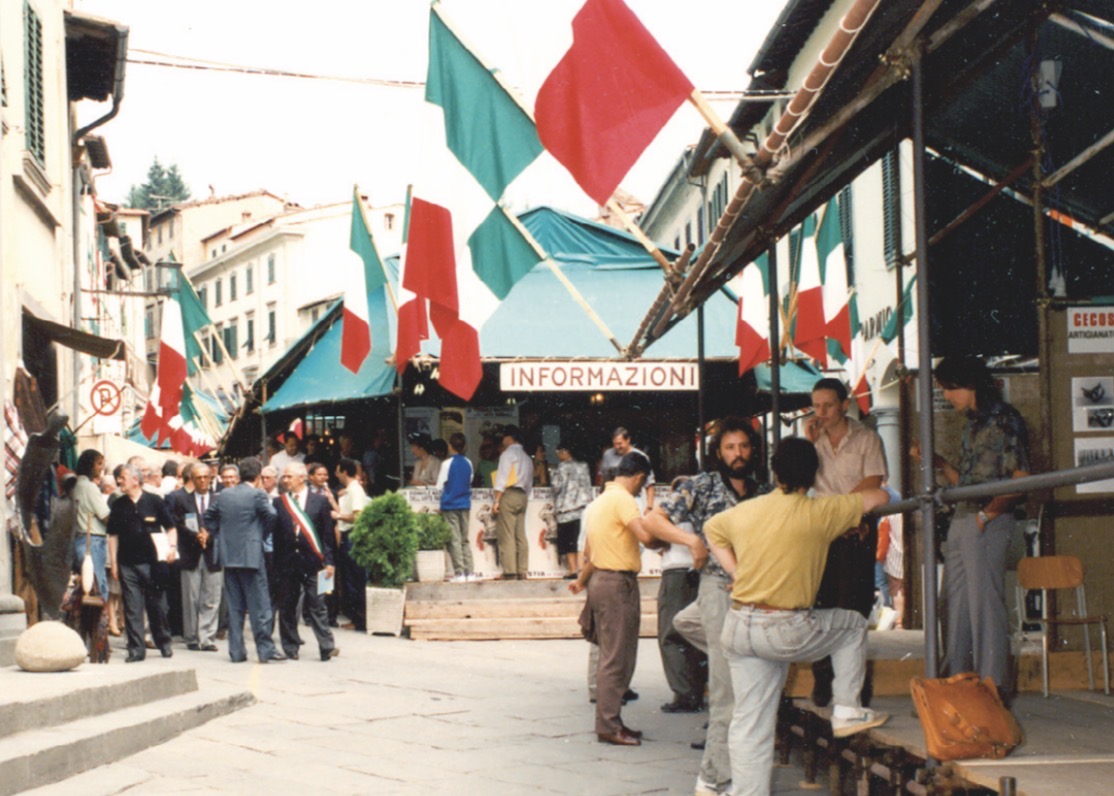
Every two years, for four days, the small town nestled in the Casentino valley turns into an open-air workshop. The main streets and squares — the Lanificio, Piazza Mazzini, Piazza Tanucci — become lively forges where the masters work iron with fire, hammer and anvil, before the eyes of visitors.
Fire, hammer and anvil: live forging in the squares of Stia.
A “live exhibition” that weaves the event into the daily life of the town.
“
For us iron is not just a material to work: it is a common language that unites cultures, generations and professionals from all over the world.
▪ Today · The world capital of forging
A global stage
Today the Biennial draws a huge international audience: in recent editions over 300 blacksmiths from more than 30 nations across five continents took part — from Japan to the United States, from Finland to Sicily. A global artistic dialogue that has made Stia a world reference point for artistic craftsmanship.