
Iron Museum
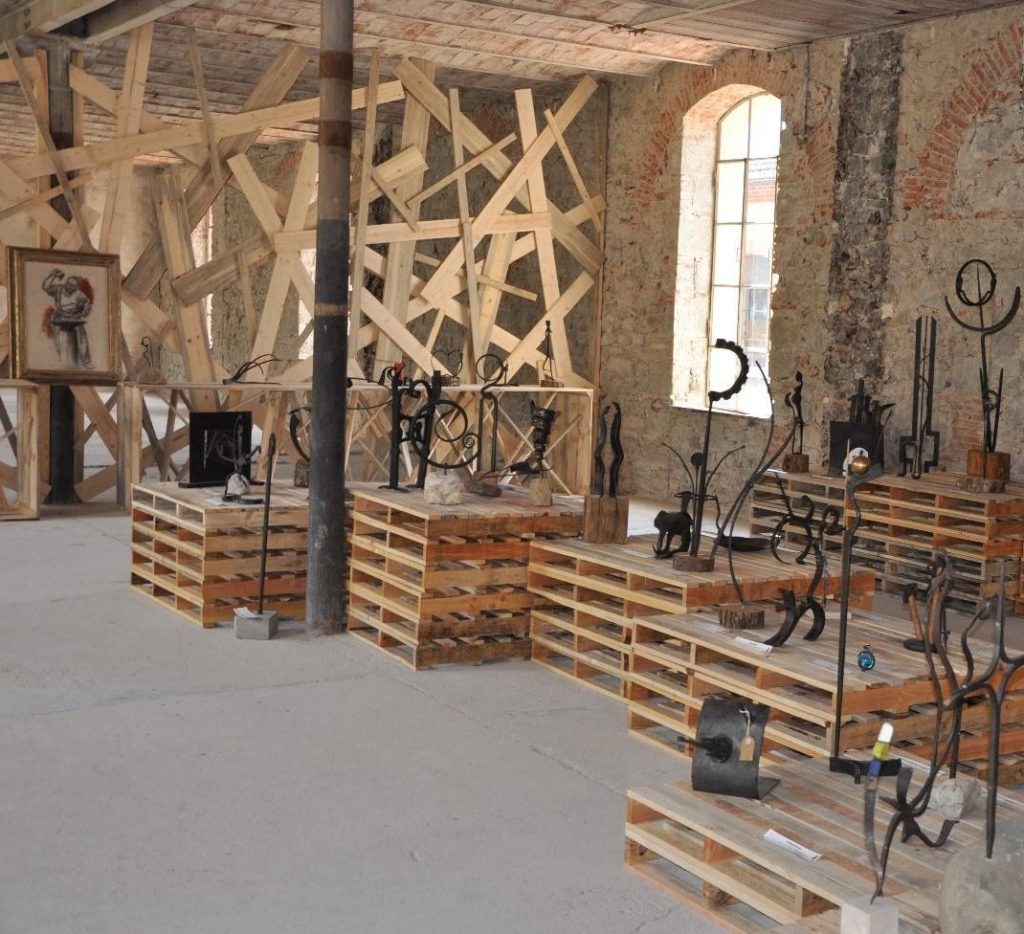
The first nucleus of the iron museum was set up in 2015, occupying only part of the hall of the old wool mill that houses it. It was then expanded and reorganized in 2021, resulting in its current form. It represents a sample and testimony of the rich heritage produced over the years by the blacksmiths who took part in the various editions of the iron “Biennale,” participating in forging competitions, the salient stages of which are chronologically retraced by the museum. The room in which the various works are exhibited, to be visited starting from the left, begins with a work from 1981 (the oldest) entitled ‘Il vecchio e il bastone’ (The Old Man and the Stick), followed by those from 1995 and 1997, created at a time when the competition still took the form of an ‘impromptu forging test’, which then became the “world forging championship” in 2001.
The various “pieces” in the museum, displayed on wooden stands arranged in chronological order, are accompanied by captions providing information on the name of the author or authors (in the case of works created by a team), their country of origin, the title of the work, the year of creation, the theme assigned for the competition, and the position achieved in the podium of winning works.
The first nucleus of the iron museum was set up in 2015, occupying only part of the hall of the old wool mill that houses it. It was then expanded and reorganized in 2021, resulting in its current form. It represents a sample and testimony of the rich heritage produced over the years by the blacksmiths who took part in the various editions of the iron “Biennale,” participating in forging competitions, the salient stages of which are chronologically retraced by the museum. The room in which the various works are exhibited, to be visited starting from the left, begins with a work from 1981 (the oldest) entitled ‘Il vecchio e il bastone’ (The Old Man and the Stick), followed by those from 1995 and 1997, created at a time when the competition still took the form of an ‘impromptu forging test’, which then became the “world forging championship” in 2001.
The various “pieces” in the museum, displayed on wooden stands arranged in chronological order, are accompanied by captions providing information on the name of the author or authors (in the case of works created by a team), their country of origin, the title of the work, the year of creation, the theme assigned for the competition, and the position achieved in the podium of winning works.
In addition to the winning works from the various editions, the room also houses a number of works considered by master blacksmiths or experts in the field to be worthy of special mention. It also houses a number of sculptures that won the sculpture competition but are not suitable for outdoor display due to their structural characteristics.